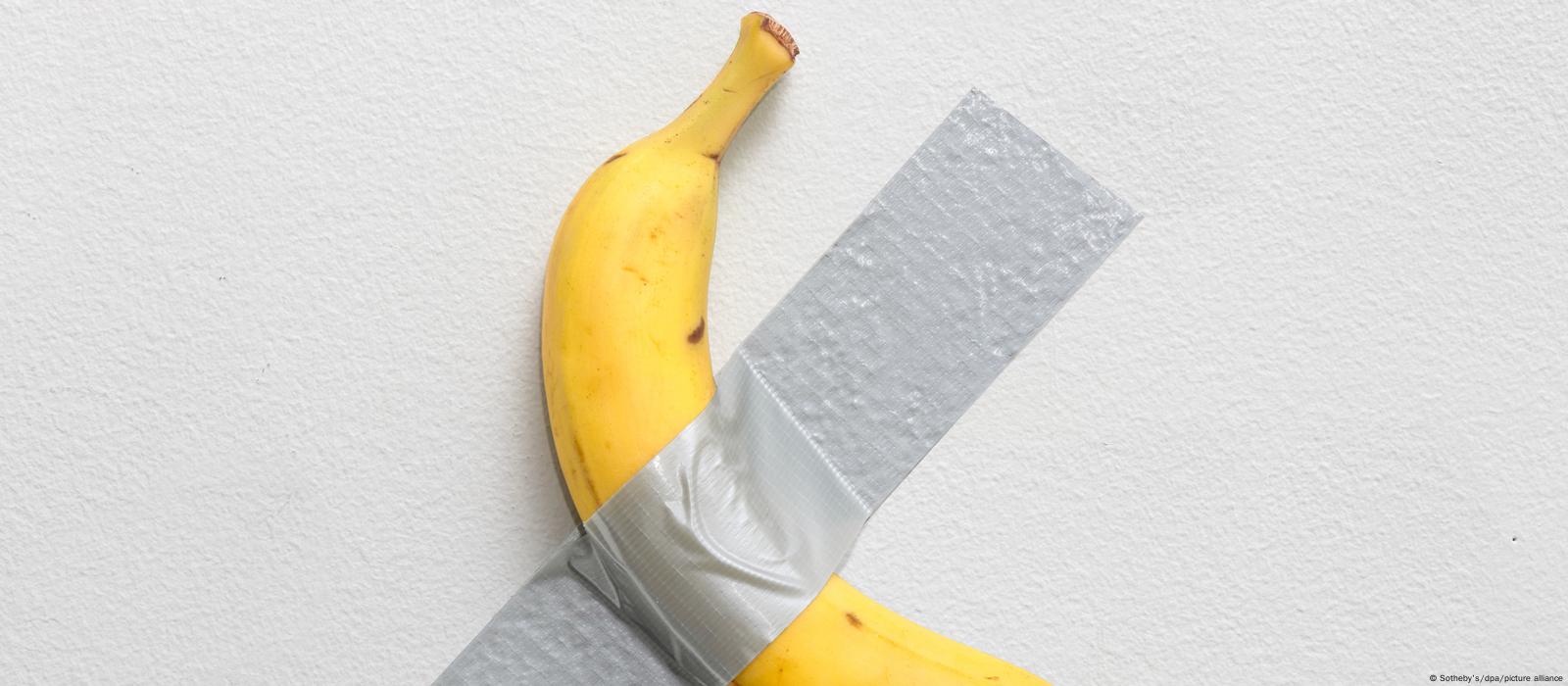

Conceptual art often walks a fine line between provocation and absurdity. Few pieces have illustrated this tension more vividly than Maurizio Cattelan’s “Comedian” — a simple banana duct-taped to a wall, first exhibited at Art Basel Miami Beach in 2019. The artwork quickly became a cultural flashpoint, sparking endless discussions about the definition of art, the value we assign to objects, and the role of performance in contemporary galleries. But more recently, “Comedian” has returned to the spotlight for a reason as audacious as the piece itself: someone has eaten it. Again.
The banana, initially priced at $120,000, is recognized more for what it symbolizes than the fruit itself — a commentary on trade, worth, and possibly the commercialization of innovation. As expressed by the artist, the true piece is not the banana but the certificate of authenticity and the idea it embodies. Holders of “Comedian” are guided to regularly substitute the fruit, embracing its temporary nature and considering the process of deterioration as an element of the artwork.
But when visitors consume the art — literally — they take the ephemeral nature of the piece to a new level.
This latest incident occurred in a gallery space where “Comedian” was on display, fastened to a stark wall with gray duct tape, as originally intended. A visitor, reportedly a student, approached the piece and nonchalantly peeled and ate the banana in front of the stunned audience. The entire act was captured on video, which quickly went viral, reigniting debates around artistic expression, intent, and ownership.
Interestingly, this isn’t the first time someone has consumed Cattelan’s banana. During its initial run at Art Basel, another performance artist named David Datuna made headlines by eating the fruit in front of a crowd, calling the act “art performance” and saying he respected Cattelan’s work. Despite initial confusion and security concerns, Cattelan’s team replaced the banana within minutes. No legal action was taken — and in some ways, Datuna’s act only added to the mythology surrounding the work.
The repetition of this behavior speaks volumes about the nature of conceptual art in the age of social media. Is the performance of eating the banana a meta-commentary on the original artwork? Or is it simply an attention-seeking act enabled by the virality of internet culture?
Cattelan himself is no stranger to artistic controversy. Known for his provocative installations — including a solid gold toilet titled “America” and a wax sculpture of Pope John Paul II struck by a meteorite — the Italian artist frequently blurs the lines between satire and seriousness, forcing audiences to confront their own expectations of art.
With “Comedian,” the banana becomes a mirror, reflecting back society’s fascination with spectacle, value, and disruption. Whether duct-taped to a wall or digested by a performance-hungry audience member, the banana resists permanence, acting instead as a symbol of impermanence and absurdity.
Critics of conceptual art often argue that pieces like “Comedian” lack depth, relying on shock value rather than technique. But defenders note that the reaction it evokes — from think pieces in major newspapers to performance interventions — is evidence of its impact. Art, after all, doesn’t exist in a vacuum. Its meaning is shaped by context, interpretation, and public discourse.
From a judicial perspective, the scenario is more intricate than it seems. While the banana can be substituted, consuming the fruit might still be viewed as damaging property or breaching gallery regulations. Nonetheless, those institutions and collectors dealing with Cattelan’s art are fully cognizant of its fundamentally performative essence. They generally prioritize maintaining the concept and its record over the tangible banana itself.
This brings up significant inquiries regarding the limits of involvement in art. If a piece of art encourages interaction, where is the boundary between participating and interfering? Is it possible for an unauthorized act to become a component of the art piece’s development? And perhaps most intriguingly: who has ownership of the narrative that emerges when someone from the audience takes action?
In today’s world dominated by digital content, art images are quickly spread and readily consumed, making the tangible piece of art almost take a back seat to its online portrayal. “Comedian” fits perfectly within this culture — an uncomplicated, nearly ludicrous image that proliferates more swiftly than the majority of great works. The banana attached to a wall is instantly turned into a meme, extraordinarily absurd, and ideally aligned with an internet-focused cultural period.
However, as some find it amusing, others perceive the piece as a commentary on the structure it thrives in. By vending a banana with a hefty price tag, Cattelan highlights the inconsistencies present in the art community — illustrating how worth can be separated from substance and how business and artistry frequently meet in disconcerting ways.
Whether one sees the banana as a masterpiece or a media stunt, its staying power — both in cultural discourse and repeated performances — is undeniable. Every time someone eats it, they breathe new life into the piece, perhaps even enhancing its legacy. In a world where attention is currency, and where meaning is increasingly collaborative, “Comedian” continues to ripen.
So when another banana is inevitably taped to another wall, somewhere in a white-walled gallery, we may all wonder: is this the original joke, a new chapter, or just another bite in the ongoing conversation about what art really is?