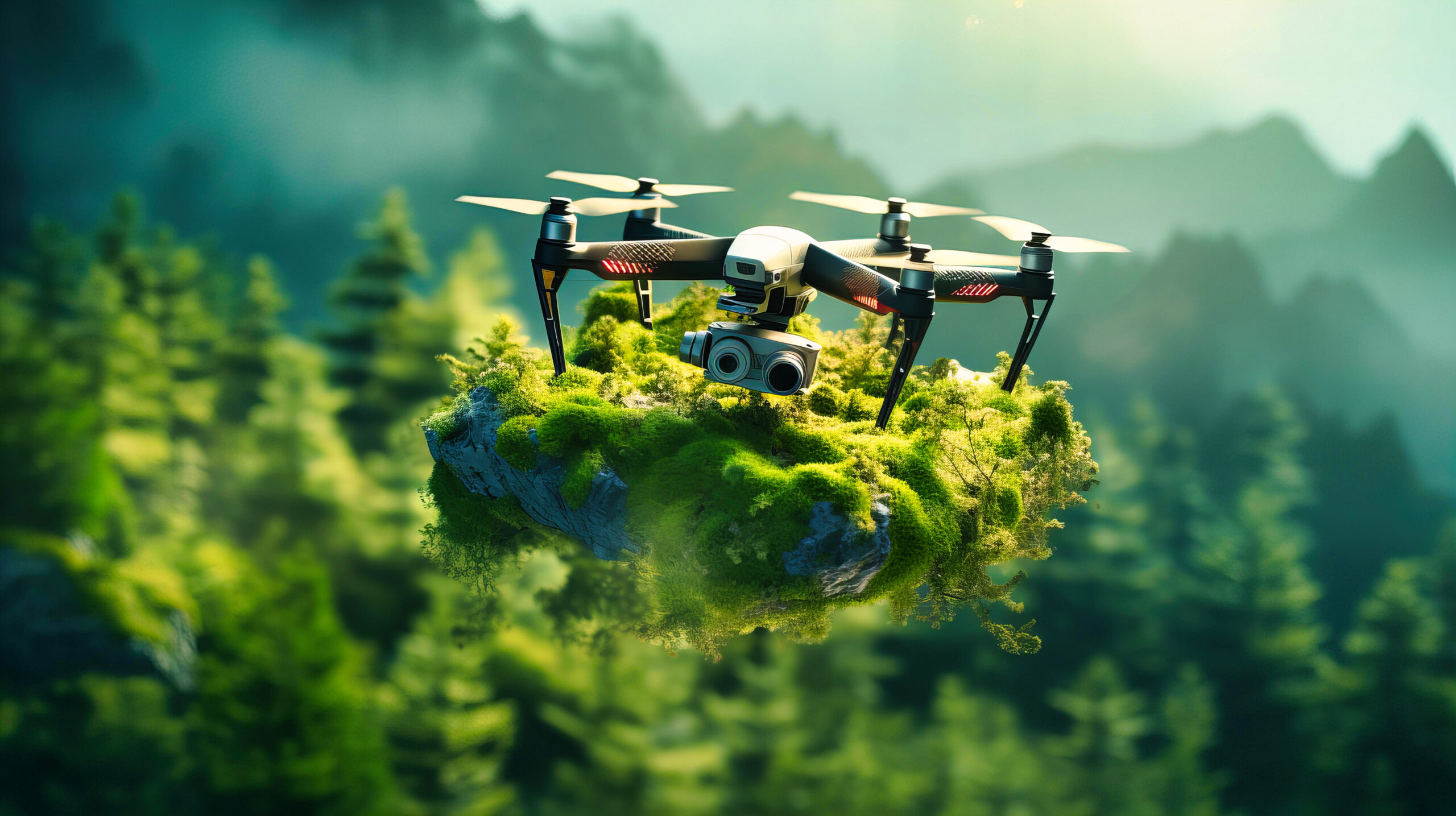

At the core of the Amazon, a fresh wave of technological innovation is rising as a powerful partner for the natural world. Artificial intelligence and unmanned aerial vehicles are revolutionizing Brazil’s approach to overseeing, safeguarding, and rejuvenating its expansive rainforest.
The rise of technology in forest conservation
Once reliant on satellite imagery and human patrols, Brazil’s environmental organizations are now incorporating artificial intelligence (AI) and drone monitoring to protect the Amazon rainforest. This fusion of technological innovation and ecological expertise has forged a robust new paradigm for forest preservation—a system that functions with greater speed, enhanced accuracy, and at a scope previously inconceivable.
The Amazon rainforest, spanning more than five million square kilometers, is home to over three million species of plants and animals. It also plays a crucial role in regulating the planet’s climate by absorbing carbon dioxide and releasing oxygen. Yet this vital ecosystem faces persistent threats from illegal logging, deforestation, and wildfires. Detecting and responding to these dangers in time has always been one of the greatest challenges for conservationists.
That situation is currently evolving. Artificial intelligence-powered systems, operating alongside unmanned aerial vehicles, are empowering authorities and scientists to detect indicators of woodland devastation nearly instantaneously. Drones are capable of traversing distant and hard-to-reach regions, acquiring high-definition imagery and information that AI algorithms then scrutinize for anomalous patterns—like deforestation, smoke plumes from blazes, or unauthorized logging routes. This methodology facilitates the prompt dispatch of notifications to local park rangers or environmental agencies, enabling them to intervene before the harm escalates.
A novel horizon in ecological oversight
Organizations such as the Brazilian Institute of Environment and Renewable Natural Resources (IBAMA), along with various non-governmental organizations, are dedicating more resources to artificial intelligence-driven solutions. These systems integrate satellite information with drone footage captured on-site, enabling them to pinpoint deforestation trends with remarkable accuracy. This advanced technology is capable of distinguishing between natural, seasonal tree loss and destructive human-induced activities.
Machine learning, a branch of AI, plays a crucial role in this transformation. By training algorithms on millions of images from both healthy and degraded forest areas, scientists have created models capable of identifying early indicators of ecological imbalance. These models can even predict where illegal deforestation is likely to occur next, allowing authorities to deploy resources proactively rather than reactively.
Some unmanned aerial vehicles come equipped with thermal imaging and LiDAR (Light Detection and Ranging) technology, enabling them to pierce through thick forest cover and gather precise topographical information. This data assists scientists in observing biodiversity, tracking the progression of wildfires, and evaluating the effectiveness of tree-planting initiatives. The incorporation of these innovations has transformed conventional conservation strategies into a methodology that is more reliant on data and foresight.
Collaboration between innovation and conservation
The triumph of this technological transformation relies not just on devices but also on the individuals who manage them. Native populations and local forest rangers, who have historically acted as custodians of the woodland, are receiving instruction in drone operation and the interpretation of AI-produced information. Their inherited understanding of the territory, coupled with sophisticated digital instruments, has demonstrated itself to be an effective synergy in safeguarding the Amazon’s fragile equilibrium.
Several Brazilian startups are also contributing to this mission. They are developing cost-effective drones that can cover vast areas and operate autonomously for hours, powered by renewable energy. Some of these companies are partnering with environmental organizations to create shared data platforms, where information collected from drones is automatically uploaded, analyzed, and visualized through interactive maps. These maps not only highlight areas under immediate threat but also track long-term environmental trends.
International collaboration has further strengthened these efforts. Partnerships with global tech firms and research institutions have enabled Brazil to access cutting-edge AI models and cloud-based systems that process enormous volumes of environmental data. This cross-border cooperation has accelerated innovation, ensuring that Brazil remains at the forefront of digital conservation.
From surveillance to restoration
The Amazon’s technological involvement goes beyond mere oversight. Drones are additionally deployed in initiatives aimed at reforestation, dispersing countless seed pods with impressive accuracy across areas that have suffered deforestation. Artificial intelligence assists in identifying the most suitable species pairings for particular soil and climatic environments, thereby enhancing survival rates and the restoration of biodiversity. This automated approach not only accelerates the operation but also diminishes the expenses and effort traditionally linked with planting by hand.
Furthermore, artificial intelligence models are assisting scientists in tracking the well-being of rehabilitated ecosystems. Through the examination of data gathered from drone photography and ecological sensors, investigators can assess ground composition, the pace of tree development, and the existence of fauna. This data, accumulated over time, offers a comprehensive insight into the progression of reforested regions, identifying the most successful methodologies and pinpointing areas requiring further action.
These innovations are establishing a self-reinforcing cycle of monitoring, intervention, and evaluation—a process that is fundamentally altering how humans engage with the natural world. Through the synergistic operation of AI and unmanned aerial vehicles, the revitalization of forests can evolve into a more deliberate, quantifiable, and enduring endeavor.
The human and environmental impact
Beyond ecological benefits, the deployment of technology in the Amazon has profound social implications. For many rural communities, these innovations have created new job opportunities in data collection, drone operation, and environmental analytics. Programs designed to train local youth in digital skills have emerged, empowering a new generation of conservation technologists.
Moreover, the clarity provided by artificial intelligence and open data systems has heightened public understanding and responsibility. Immediate notifications regarding deforestation empower citizens, reporters, and ecological organizations to monitor illicit operations and urge officials to act promptly. Such a degree of insight was unimaginable merely ten years prior.
However, experts caution that technology alone cannot solve the complex challenges facing the rainforest. Effective policies, political will, and community engagement remain essential. Drones and AI provide powerful tools, but they must be integrated into a broader framework of sustainable development and forest governance.
Envisioning a sustainable tomorrow
The fusion of technology and ecology offers a glimpse of what the future of conservation might look like—not just in Brazil but across the planet. As climate change accelerates, the need for intelligent, scalable solutions to protect natural ecosystems has never been greater.
Brazil’s experiment with AI and drone technology is setting a precedent for how nations can use innovation to defend their natural heritage. By combining the precision of data science with the passion of environmental stewardship, the country is redefining what it means to protect the world’s most important rainforest.
In the Amazon’s vast expanse, machines and humans are learning to work together for a common purpose: preserving life itself. As drones soar above the treetops and algorithms learn the rhythm of the forest, a new era of conservation is taking flight—one where technology serves not to dominate nature, but to defend it.