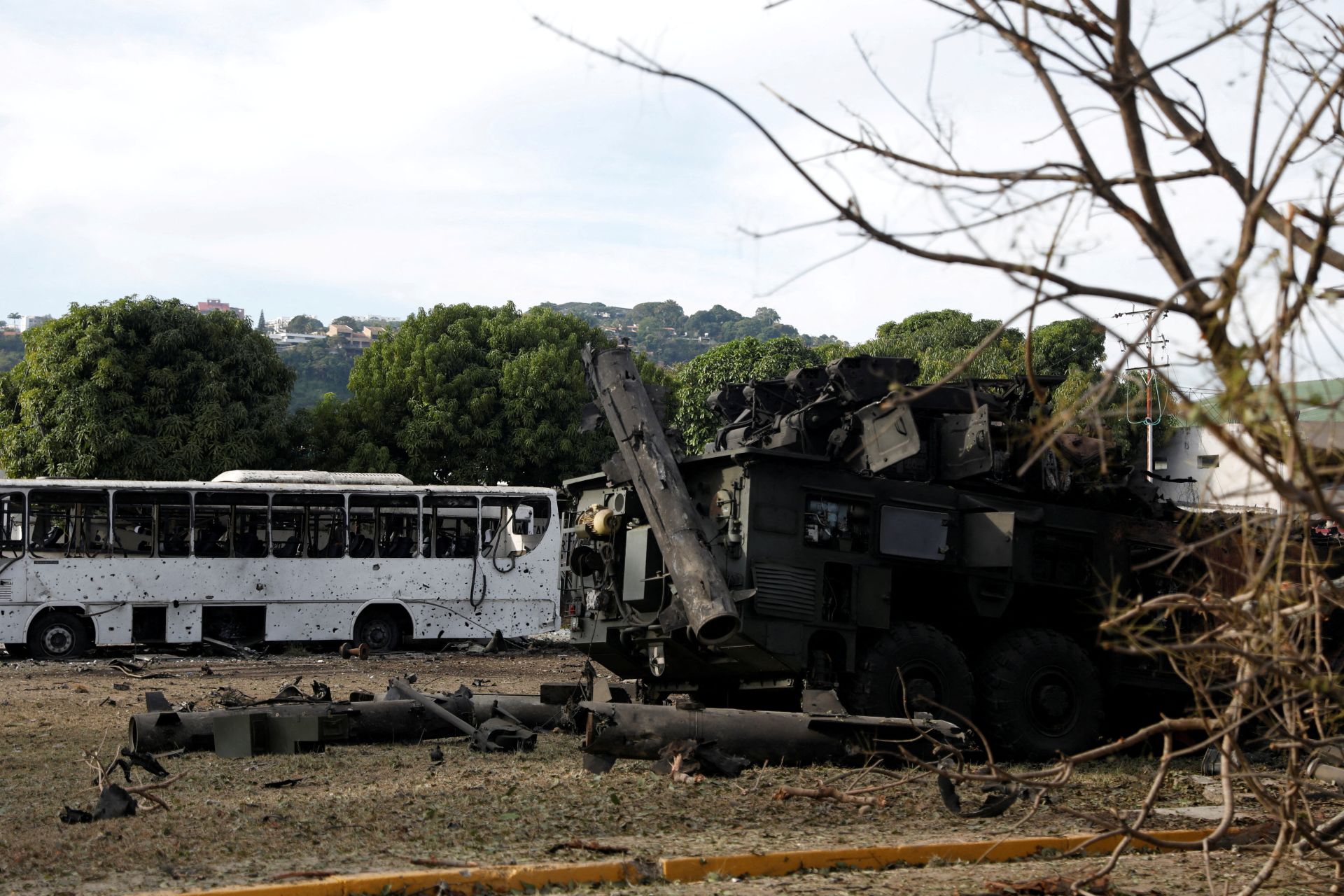

Venezuela woke on Saturday to a tense mix of relief, celebration, and fear after U.S. forces captured President Nicolás Maduro following a night of explosions and targeted strikes across the Caracas Valley.
As residents cautiously returned to the streets, reactions split sharply. Some Venezuelans expressed hope that Maduro’s removal could open a path toward change after years of repression and crisis, while others condemned the operation and rallied to demand his release, calling the arrest an abduction and denouncing a breach of national sovereignty.
Despite the pockets of celebration, uncertainty dominated many conversations. Several people said they feared retaliation and instability in the days ahead, pointing to the continued presence of pro-government armed groups known as “colectivos,” whom residents reported seeing moving through neighborhoods on motorcycles with weapons. The atmosphere has been further shaped by a recently approved law by the government-controlled National Assembly that labels support for U.S. naval blockades as “treason,” heightening the perceived risks of speaking out.
U.S. officials described the raid as the culmination of months of intelligence-gathering and rehearsals. A small team tracked Maduro’s routines and locations, and elite units trained using a full-scale replica of a Caracas safe house to rehearse entry routes. The plan—dubbed “Operation Absolute Resolve”—was tightly held and, according to the U.S. account, was not shared in advance with Congress.
Late Friday night U.S. time, and only moments before midnight in Caracas, authorization was granted to initiate the mission, an approval intended to heighten surprise and exploit the cover of night. Senior military officials reported that the operation, which blended actions by air, land, and sea, unfolded over a little more than two hours.
Maduro and his wife were subsequently taken to New York to confront charges tied to drug trafficking and weapons, accusations he had previously denied. From Washington, President Donald Trump stated that the United States would take “temporary” control to supervise a transition and handle Venezuela’s oil resources until a permanent successor is in place, a declaration that heightened political friction within Venezuela and unsettled governments throughout the region.
International reactions were swift. Brazil’s leadership warned the violent capture set a “dangerous precedent” for the international community, and calls grew for urgent discussions in multilateral forums.
Venezuelans living outside Venezuela marked the moment across the cities where they have resettled after years of large‑scale migration, yet even among those who approved of Maduro’s arrest, a measured tone dominated: the action may signal a pivotal shift, but it offers no assurance of swift stability. The key question—both within Venezuela and throughout its diaspora—continues to be what comes next and who will ultimately wield real authority on the ground.