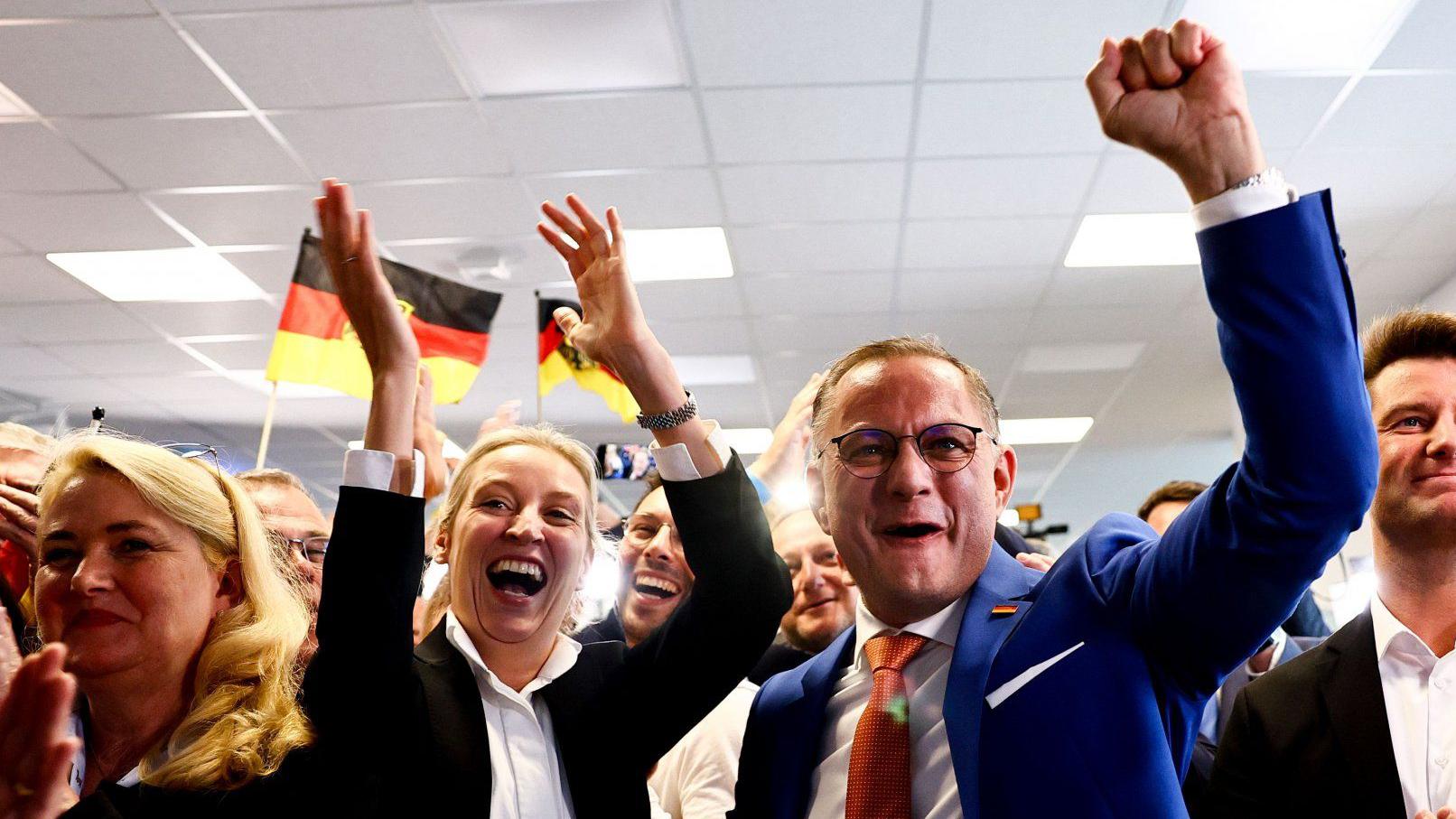

A notable political shift is occurring across Europe, as populist parties on the right of the political spectrum are gaining unprecedented traction. Recent polling data indicates that these movements have, for the first time, surged to the top of national popularity rankings in Germany, France, and Britain. This marks a significant moment in modern European politics, challenging the dominance of traditional, mainstream parties and signaling a new era of political fragmentation and realignment. The ascendancy of these parties is a complex phenomenon driven by a variety of interconnected factors, from economic dissatisfaction to cultural anxieties.
En Alemania, el partido de extrema derecha Alternativa para Alemania (AfD) ha superado recientemente a los partidos conservadores convencionales, convirtiéndose en el más popular según una nueva encuesta. Este resultado es especialmente notable debido a la antigua sensibilidad de Alemania hacia las ideologías de extrema derecha. La AfD, que comenzó como un partido anti-Euro, se ha transformado en un movimiento populista con una postura inflexible sobre la inmigración y un escepticismo profundo hacia la Unión Europea. Su ascenso se percibe como un desafío directo al consenso político del país de la posguerra.
The situation in France is equally dramatic. The far-right National Rally (Rassemblement National) has held a clear lead in national polls for some time. This party, under its new leadership, has worked to normalize its image and broaden its appeal beyond its traditional base. Their success is attributed to a potent mix of anti-immigration rhetoric, opposition to European integration, and a focus on cost-of-living issues. The party’s dominance has profoundly influenced the political conversation and strategies of other parties.
Across the English Channel, Britain’s political landscape is also undergoing a major transformation. A right-wing populist party, Reform UK, has been topping national polls, ahead of the established Conservative and Labour parties. This surge is fueled by widespread public discontent with the current government, a desire for stronger immigration controls, and a general feeling that mainstream politicians are out of touch with the concerns of everyday people. Reform UK’s momentum has sent shockwaves through the British political establishment.
The combined achievements of these groups in three key European countries are not disconnected incidents. They reflect a widespread movement of discontent with the current situation. An increasing number of voters feel marginalized by globalization and are challenging the advantages of multiculturalism and unrestricted borders. The economic strategies of centrist administrations, frequently seen as neglecting the difficulties faced by the working population, have also played a role in this change in the political landscape.
Many of these parties have successfully positioned themselves as the voice of the «common people» against a «corrupt elite.» They use populist rhetoric to create a clear division between a supposedly pure national identity and a cosmopolitan establishment that they claim is beholden to international interests. This narrative, disseminated effectively through social media and alternative news channels, resonates with voters who feel alienated and unheard by traditional political institutions.
The political implications of this populist wave are extensive. In Germany, the ascent of the AfD complicates the ability of established parties to create stable governing alliances, resulting in a more divided and uncertain political environment. In France, the National Rally’s increasing support might cause considerable political disruption in upcoming elections, possibly changing the nation’s approach to internal and European matters. In Britain, the emergence of Reform UK poses a threat to the traditional two-party system, possibly changing it forever.
This phenomenon also has significant implications for the European Union. Populist parties in these key nations often share a Eurosceptic or outright anti-EU stance, challenging the very foundation of the European project. Their success could empower similar movements in other member states and lead to a more inward-looking, protectionist Europe. This could have a profound effect on everything from trade agreements and migration policy to the continent’s collective response to international crises.
The surge of far-right populism is a wake-up call for Europe’s mainstream parties. It demonstrates that a large segment of the electorate feels that their concerns on issues like immigration, national identity, and economic security are not being adequately addressed. To counter this trend, mainstream parties must find new ways to connect with these voters, rebuild public trust, and offer compelling solutions to the problems that are driving people toward radical alternatives. The political future of the continent may well depend on their ability to adapt to this new reality.