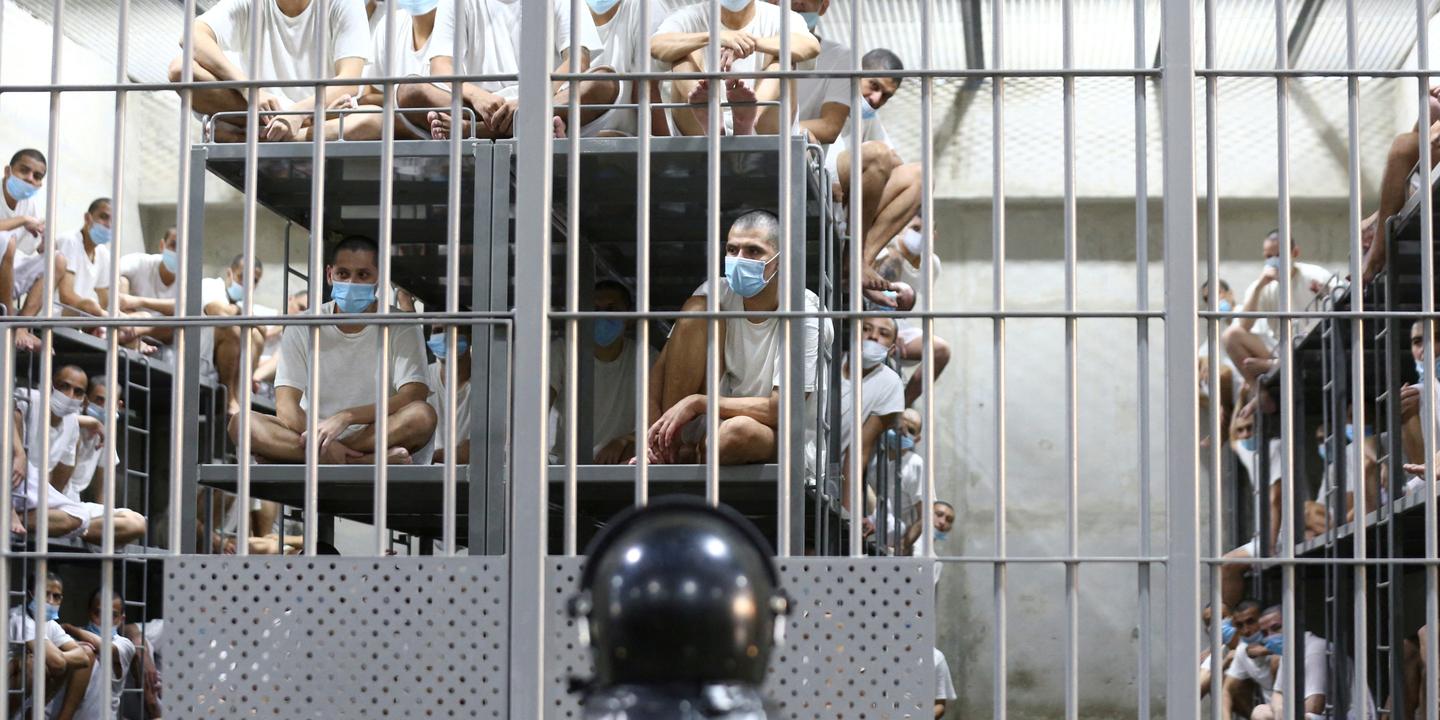

After being deported from the United States, a group of Venezuelan migrants ended up in what they describe as an extremely troubling and punitive environment within a Salvadoran detention facility. A journey intended to start anew in pursuit of safety and stability rapidly became a harrowing ordeal characterized by overcrowding, restricted access to essential resources, and apprehension.
Many of these individuals had arrived in the United States hoping to escape the difficult social, political, and economic conditions in Venezuela. For them, deportation was already a significant emotional blow. However, the circumstances awaiting them in El Salvador compounded their sense of despair.
Upon reaching El Salvador, those deported were allegedly kept in a detention center resembling a prison, where the living conditions were inhumane. Testimonies from several individuals who endured the ordeal mentioned strict limitations, rigorous monitoring, and inadequate provisions. The people confined portrayed their detention as an uncertain and distressing time, with scarce details about their legal status or the duration of their stay.
One of the most troubling aspects, as reported by several migrants, was the lack of basic hygiene provisions. Access to clean water, sanitation facilities, and personal hygiene items was extremely limited. In some cases, people shared overcrowded cells where they had to sleep on the floor without proper bedding or ventilation. For many, the facility felt more like a high-security prison than a temporary holding area.
The absence of openness and information from officials only increased the tension. Migrants mentioned they were not properly briefed about their rights, deportation processes, or the rationale for their relocation to El Salvador. Without definitive advice or legal assistance, many were forced to guess about their future.
Some prisoners also reported receiving harsh treatment from the guards and personnel. Although not everyone suffered physical harm, the ongoing menace of retribution and an atmosphere of fear added to a sense of powerlessness. Along with the distress of being uprooted and the unpredictability of what lies ahead, these circumstances made many feel mentally and emotionally drained.
This situation also raised serious questions about the coordination between immigration authorities and the countries involved in deportation agreements. While the U.S. has historically worked with partner countries in the region to manage migration flows, the choice to deport Venezuelans to El Salvador rather than directly to Venezuela or another neutral location has prompted scrutiny.
Critics argue that such arrangements place already vulnerable individuals into volatile or ill-equipped systems that may not guarantee their safety or rights. El Salvador’s detention infrastructure, while functional for domestic criminal processes, may not be designed to accommodate large numbers of foreign nationals in need of humanitarian protection. The strain on these facilities becomes evident when international transfers are made without adequate planning or oversight.
The problem of large-scale migration from Venezuela continues to be one of the most urgent challenges in the Western Hemisphere. In recent years, millions have left the nation due to extreme inflation, political instability, and significant shortages of food and medical supplies. A large number aim to secure asylum or temporary refuge in neighboring countries, while others choose lengthier and riskier routes to arrive in North America.
For those who reach the U.S. border, the road does not always end in refuge. In recent years, immigration policy shifts have led to a rise in deportations and transfers to third countries as part of broader efforts to deter undocumented entry. These policy tools, however, often fail to consider the on-the-ground realities in the receiving nations or the long-term well-being of deportees.
The accounts of Venezuelan migrants detained in El Salvador highlight the impact of these policies on individuals. Although immigration control is a sovereign prerogative, the approaches taken and the environments established merit examination, especially when they pertain to people escaping extreme situations.
Organizations that support migrant rights are requesting a reassessment of existing deportation agreements, stressing the necessity for humane treatment and fair legal proceedings. They contend that any collaboration involving the movement of individuals between countries must establish explicit criteria for care, transparency in processes, and legal assistance for those impacted.
Furthermore, the voices of those directly impacted must be included in the conversation. Their experiences offer critical insights into the effectiveness and consequences of international migration policies. Without these perspectives, it is easy to lose sight of the personal toll such strategies take.
For Venezuelan deportees relocated to El Salvador, the experiences described highlight ethical and logistical issues that warrant consideration. Holding people in severe conditions without adequate supervision may breach international standards regarding human rights and refugee protection.
As migration continues to shape political discourse and border strategies in the Americas, the treatment of deportees and asylum seekers will remain a key issue. For policymakers, the challenge lies in balancing national interests with humanitarian responsibilities. For the individuals caught in the middle, the hope is for dignity, transparency, and a fair chance to rebuild their lives.
Although the larger discussion regarding immigration is intricate, treating individuals with compassion is straightforward. The narratives coming out of El Salvador highlight that every policy choice affects actual people with genuine experiences—experiences that deserve attention.