
The international system that has underpinned decades of relative stability is facing mounting stress. A new global security assessment warns that aggressive political disruption, driven largely by US leadership, is accelerating the erosion of long-standing rules, alliances, and shared norms.
According to the Munich Security Report 2026, the world is now experiencing what it labels “wrecking-ball politics,” a governing style in which forceful disruption takes precedence over stability and collective agreement, and the report contends that this shift is putting unprecedented pressure on the postwar international order, exposing it to its most significant challenges since its inception and generating repercussions that reach far beyond conventional geopolitical competition.
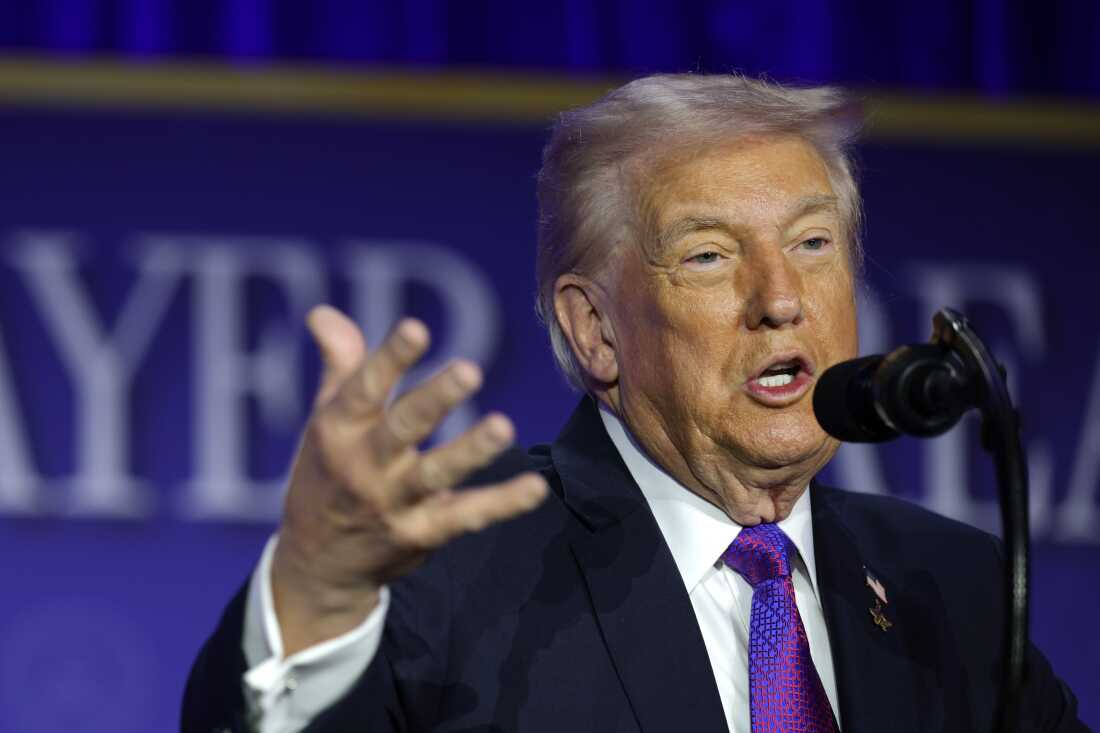
Released ahead of the annual Munich Security Conference, the report presents a stark diagnosis of the current global climate. It identifies US President Donald Trump as the most influential figure challenging the foundations of the existing international system, portraying his leadership style as a decisive break from decades of US-backed multilateralism. Rather than reinforcing institutions designed to manage conflict and cooperation, the report suggests that current US policy is actively weakening them.
A regulatory framework confronting unparalleled upheaval
The international order established after 1945 was built to prevent a return to large-scale conflict, promote economic cooperation, and create mechanisms for collective security. Over time, it expanded through institutions such as the United Nations, NATO, the World Trade Organization, and a web of treaties and alliances that helped stabilize relations between major powers.
The Munich Security Report argues that this framework is now under direct threat. It states that more than eight decades after construction began, the system is no longer merely under pressure but is actively being dismantled. The language used is unusually blunt for a document traditionally rooted in diplomatic analysis, reflecting the authors’ assessment that incremental erosion has given way to deliberate disruption.
Central to this argument is the depiction of Trump as one of the foremost “demolition men” of the global order. The report presents this disruption not as an unintended or reflexive response, but as a hallmark of a political strategy that treats established rules as barriers instead of protections. Within this framework, international agreements are approached as transactional instruments, valued only when they offer immediate benefit.
This transition, the report cautions, could swap principled collaboration for improvised arrangements that prioritize immediate benefits at the expense of lasting stability, creating conditions that erode predictability, strain trust among partners, and complicate unified efforts to address global challenges.
The tone set by Washington and its ripple effects
The report places the present moment against the wider backdrop of the second Trump administration, underscoring a sequence of moves and remarks that have shaken long-standing partners. One of the first indicators emerged at the previous Munich Security Conference, where US Vice President JD Vance gave a speech strongly rebuking European leaders.
Vance’s address, delivered just weeks into the administration, challenged Europe on issues such as migration and free expression, arguing that the continent’s greatest threats originated internally rather than from external adversaries. The remarks surprised many in the audience and were widely interpreted as a departure from the cooperative rhetoric typically associated with transatlantic relations.
According to the report, that speech proved to be an early indicator of a turbulent year to follow. Subsequent policy moves included the imposition of punitive tariffs on close European allies, signaling a willingness to weaponize economic ties. Even more striking were statements suggesting the possibility of US military action to seize Greenland, a territory belonging to NATO ally Denmark, a notion that sent shockwaves through diplomatic circles.
The report also highlights what it characterizes as a deferential approach toward Russia amid its invasion of Ukraine, a stance that, it contends, has placed additional pressure on alliances and sparked skepticism about the dependability of US commitments to collective defense and international law.
Taken together, these actions contribute to what the report characterizes as a broader pattern: the use of power to reshape the international environment without regard for established norms or the concerns of long-standing partners.
A world drifting toward transactional politics
One of the Munich Security Report’s primary cautions is that the present course could produce a global order largely shaped by transactional dealings, where cooperation is steered not by shared principles or mutual duties but by immediate calculations of gain.
The report suggests that this approach favors actors with the greatest economic and military leverage, while marginalizing smaller states and populations that rely on predictable rules for protection and opportunity. Critics cited in the report fear that this shift will produce a world that primarily serves the interests of the wealthy and powerful, rather than addressing the broader needs of societies facing economic and social strain.
Rather than posing an abstract hypothesis, this concern is tied directly to clear shifts in public sentiment and political conduct across various regions, where declining trust in institutions and enduring inequalities have left many people doubtful that governments are capable of providing meaningful answers.
The report argues that disruptive leadership styles may initially resonate with voters who feel excluded or ignored. Over time, however, the erosion of cooperative frameworks risks deepening the very problems that fuel discontent, including economic insecurity, inequality, and declining social mobility.
Public sentiment reflects growing pessimism
To support its analysis, the Munich Security Report draws on public opinion surveys conducted across a wide range of countries. The findings point to a pervasive sense of anxiety about the future, with many respondents expressing doubts about their governments’ ability to improve living standards or address structural challenges.
Issues such as housing affordability, rising inequality, and stagnating wages feature prominently in these concerns. In many cases, respondents believe that current policies will leave future generations worse off, a sentiment that underscores a broader loss of confidence in long-term progress.
The data reveal particularly high levels of pessimism in several European countries. In France, a clear majority of respondents indicated that they expect government decisions to harm rather than help future generations. Similar views were expressed by more than half of those surveyed in the United Kingdom and Germany. In the United States, while the figure was lower, nearly half of respondents shared this outlook.
The report reads these findings as pointing to a rising feeling of personal and shared powerlessness, noting that many now link political shifts not with progress but with uncertainty and deterioration.
Assigning responsibility in a volatile environment
Notably, the surveys also explored perceptions of responsibility for this bleak outlook. When asked whether the policies of the US president are beneficial for the world, significant portions of respondents across multiple countries expressed disagreement.
Across the United States, Canada, major European economies, Japan, Brazil, and South Africa, at least half of respondents stated they somewhat or strongly disagreed with the idea that current US leadership is having a positive influence globally. This broad skepticism indicates that concerns about US policy stretch beyond traditional critics and resonate across varied political and cultural landscapes.
The report stops short of attributing all global challenges to a single leader. However, it emphasizes that the scale of US influence magnifies the effects of its policy choices. When the world’s most powerful country signals indifference or hostility toward established norms, the consequences reverberate throughout the international system.
This dynamic, the report contends, encourages additional actors to embrace comparable transactional or unilateral approaches, hastening the erosion of cooperative frameworks.
The Munich Security Conference at the center of attention
The release of the report coincides with preparations for the Munich Security Conference, an annual gathering that brings together heads of state, ministers, military leaders, and security experts from around the world. Scheduled to run over three days in Munich, the event is expected to host more than 50 heads of state and government, underscoring its role as a key forum for strategic dialogue.
While the conference traditionally serves as a platform for reaffirming shared commitments, this year’s discussions are likely to be shaped by uncertainty and tension. The themes raised in the report, including the durability of alliances and the future of multilateral institutions, are expected to dominate the agenda.
US President Trump will not attend the conference. Instead, the United States will be represented by Secretary of State Marco Rubio and a large congressional delegation. According to conference organizers, more than 50 members of Congress are expected to participate, signaling continued engagement even in the absence of the president himself.
The report indicates that while representation at this level keeps communication channels open, it also underscores how the president’s absence carries symbolic weight at a time when strong leadership and reassurance are urgently needed.
An international order at a crossroads
The Munich Security Report refrains from treating its conclusions as fixed or unchangeable, presenting the present phase instead as a pivotal juncture where decisions by major stakeholders are poised to influence global security’s direction for many years.
The authors contend that although the post-1945 order has continually shifted, its endurance has relied on a common belief that rules and institutions uphold shared interests, and weakening those foundations, even when framed as national gains, risks ushering in a more unstable and unequal world.
At the same time, the report acknowledges that the existing system has not delivered prosperity or security equally. Addressing legitimate grievances, it suggests, requires reform rather than destruction. Strengthening institutions to better reflect contemporary realities may be more effective than abandoning them altogether.
As discussions continue in Munich and elsewhere, global leaders will face the task of navigating domestic demands while meeting their international duties, and the report delivers a stark message: a world driven only by raw power and transactional dealings might yield brief advantages for a few, yet it poses lasting dangers for everyone.
In highlighting these dynamics, the Munich Security Report 2026 offers not just a critique of current leadership, but a broader reflection on the fragility of the international order. Whether that order adapts, fractures, or gives way to something entirely new will depend on decisions being made now, in an era marked by disruption, uncertainty, and competing visions of the future.