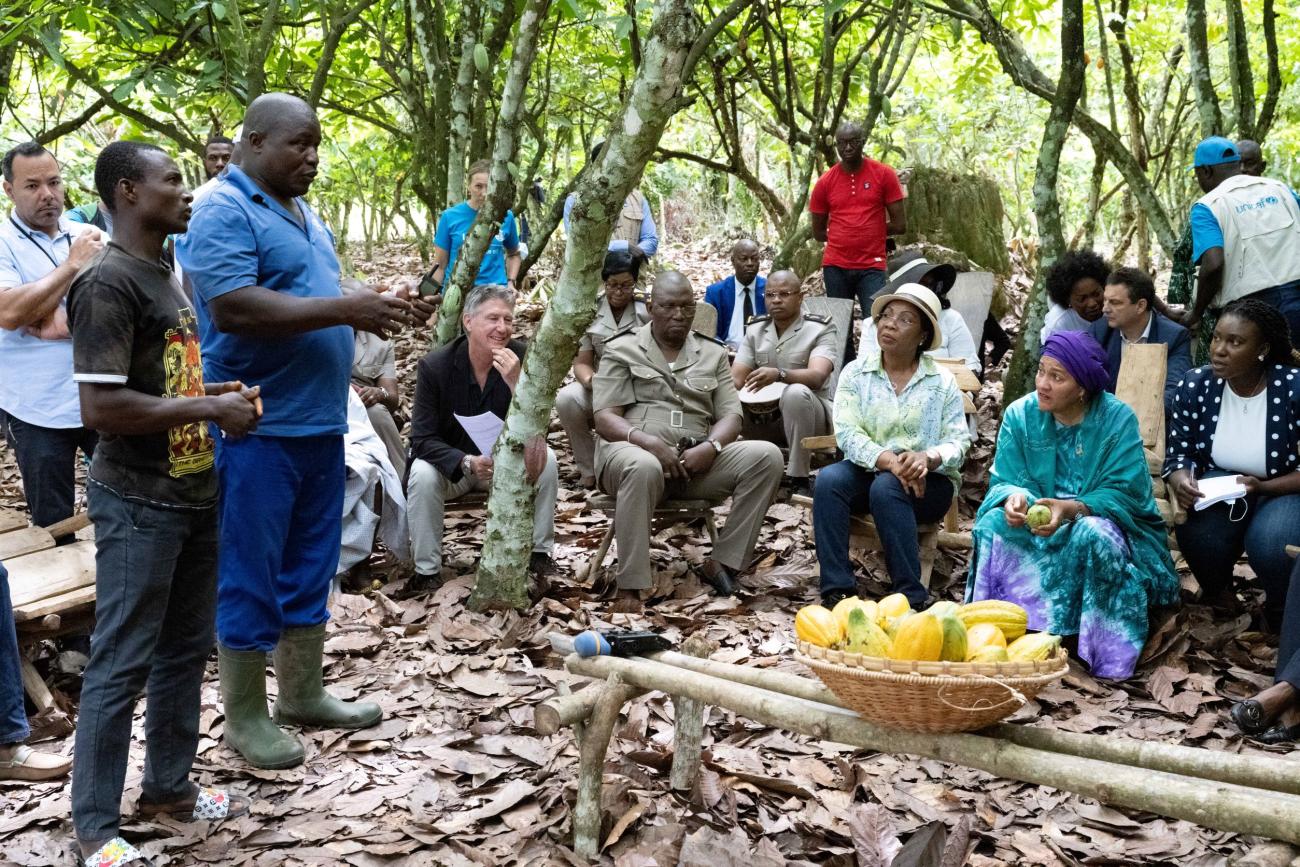
The forest landscape in Gabon and its related CSR potential
Gabon stands among the world’s most densely forested nations, with roughly 80–90% of its territory covered by forests and a notably high share of undisturbed ecosystems throughout the Congo Basin. The country established a network of national parks in the early 2000s and continues to implement policies designed to harmonize resource exploitation with environmental protection. As industries like oil and mining largely drive formal GDP, corporate social responsibility programs offer significant opportunities to direct private-sector investment toward forest preservation while generating sustainable jobs and value chains for rural populations.
CSR approaches that promote woodland preservation and sustain employment within local communities
- Performance-based payments for forest protection — Corporations and donor governments may provide outcome-linked funding tied to demonstrable drops in deforestation or emissions, frequently reinforcing government oversight and community incentive programs.
- Sustainable supply-chain investments — Companies sourcing timber, palm oil, or non-timber forest products (NTFPs) often allocate resources to certification efforts, improved practices, and the inclusion of smallholders to curb forest loss while expanding local processing employment.
- Community-based enterprises and NTFP value chains — CSR support directed toward processing, market entry, and capacity building for goods such as bush mango (dika nut), rattan, wild rubber, or traditional oils fosters steady income streams that ease pressure on intact forests.
- Protected-area management partnerships — Companies underwrite park operations, anti-poaching activities, ecological monitoring, and ecotourism facilities, generating positions for rangers, guides, and hospitality workers.
- Skills development and small-business finance — Vocational programs in sustainable forestry, carpentry, eco-lodge services, and value-added processing, paired with microcredit, help establish resilient local jobs.
- Offsets and biodiversity investments — When responsibly designed, corporate biodiversity portfolios and offsets contribute to landscape rehabilitation, reforestation, and livelihood initiatives endorsed by local communities.
Outstanding CSR initiatives and public–private sector collaborations in Gabon
- Performance-based international partnership (Norway–Gabon cooperation) — Since the late 2000s, Gabon has engaged in a performance-driven partnership with external allies aimed at curbing deforestation and improving forest governance. This combination of financial backing and technical guidance supported the development of national monitoring systems and introduced incentives for conserving forests, ultimately paving the way for targeted livelihood initiatives benefiting communities near protected zones.
- National parks and Wildlife Conservation Society (WCS) collaboration — WCS has collaborated with the Gabonese government to strengthen the national parks network, assisting with the creation of management structures, ranger training programs, and community outreach initiatives. Additional CSR contributions from private donors and companies have covered patrol operations, community farming efforts, and local job opportunities in park administration and tourism-related services.
- Sustainable forestry concessions and certification — Several timber companies operating in Gabon have sought international sustainability certifications and enhanced forest-management practices. CSR commitments from concession operators often include local hiring obligations, professional training for logging crews and mill staff, investments in community infrastructure, and actions designed to help local economies shift away from unsustainable timber extraction.
- Agroforestry and private-sector agricultural projects — Companies expanding agricultural ventures in Gabon have, in numerous verified cases, agreed to zero-deforestation policies, community development funds, and initiatives integrating smallholders into their supply chains. When effectively carried out, these efforts blend technical training, seed financing, and guaranteed purchase deals that generate both farming and processing jobs without clearing primary forest.
- Ecotourism-led local employment around Loango and other parks — Eco-lodges and wildlife-focused tourism within conservation landscapes have generated specialized employment — guides, hospitality staff, boat operators — while energizing local food and craft markets. Some tourism operators maintain formal CSR commitments prioritizing local recruitment and investing in professional training.
Illustrative data and impacts
- Forest extent and protected area coverage — Gabon’s forest cover is among the highest in Africa; the government committed a significant portion of national territory to formal protection through a national park network established in the early 2000s, expanding legal safeguards for biodiversity and carbon stocks.
- Employment multipliers — Sustainable forest enterprises and ecotourism tend to create more local jobs per unit of resource use than extractive industries. For example, well-managed community forestry and NTFP processing generate income across multiple local value-chain stages: collection, processing, transport, and retail.
- Revenue and incentives — Performance-based funding and CSR investments that link finance to verified conservation outcomes create incentives for governments and companies to prioritize sustainable management over short-term extraction.
Best-practice features of effective CSR programs in Gabon
- Integration with national policy and monitoring — CSR efforts that reflect national rainforest and land‑use strategies tend to endure longer, and when corporate resources are tied to nationwide monitoring systems such as satellite‑supported deforestation tracking, overall accountability improves.
- Community consent and benefit-sharing — Initiatives that obtain Free, Prior and Informed Consent (FPIC) and establish transparent benefit‑sharing arrangements help prevent disputes and more reliably enhance local livelihoods.
- Local capacity and value addition — Emphasizing skills development, small‑scale processing, and stronger market connections fosters local employment with greater added value instead of sending raw goods elsewhere for processing.
- Long-term finance and measurable targets — Extended CSR pledges paired with clear social and environmental KPIs, including job creation, deforestation indicators, and income variations, consistently deliver better results than isolated short‑term contributions.
- Third-party verification and transparency — Oversight conducted by independent organizations—such as NGOs, certification entities, or government auditors—enhances credibility and enables adjustments whenever project outcomes fall short.
Key challenges and potential risks to consider
- Greenwashing and poorly structured offsets — CSR that claims conservation benefits without rigorous, verifiable outcomes can displace real action and undermine community trust.
- Leakage and indirect pressures — Protecting one area without addressing broader commodity-driven demand can shift deforestation elsewhere; landscape-scale strategies are needed.
- Power imbalances — Large corporate actors must avoid imposing solutions that favor investors over local priorities; genuine co-design with communities is crucial.
- Market and commodity volatility — Reliance on a single commodity for jobs can expose communities to price shocks; diversified livelihood support reduces vulnerability.
Practical recommendations for corporate actors and partners
- Design CSR as strategic investments — Present initiatives as long-range commitments that reinforce supply chain resilience, strengthen social license to operate, and safeguard natural capital, instead of positioning them as short-lived philanthropic efforts.
- Focus on diversified livelihoods — Blend assistance for NTFP value chains, sustainable timber practices, agroforestry systems, and ecotourism ventures to distribute risk while broadening employment opportunities.
- Partner with credible local and international NGOs — Draw on conservation science and community engagement expertise to jointly shape interventions and track measurable results.
- Use performance-based payments — Whenever feasible, link financial support to conservation and livelihood metrics validated by independent assessments to reinforce transparency and effectiveness.
- Prioritize skills and market access — Building capacities and connecting beneficiaries to domestic and international markets helps ensure that employment remains both resilient and well compensated.
Gabon’s vast forest landscapes and its comparatively low rate of deforestation create a strategic setting where CSR can generate measurable conservation benefits while supporting stable, sustainable local jobs. The most effective efforts are those that connect private funding with national monitoring systems, ensure community participation and fair distribution of gains, and channel investment into diversified value chains and training that help boost household income.